

With the rapid development of technology, the education sector is undergoing a transformation. From virtual reality to artificial intelligence, technology is redefining how we learn and educate. The rise of artificial intelligence (AI) is reshaping our learning in unprecedented ways. Technology is reshaping the world, making continuous training, skills enhancement, and reskilling essential, and education is transforming to adapt to this need. Breakthrough technologies such as artificial intelligence, online learning, and virtual and augmented reality are playing an increasingly important role.

Future Education Outlook
Virtual Reality and Augmented Reality: Immersive Learning Experiences:
Virtual reality (VR) and augmented reality (AR) offer a completely new dimension to learning. Students can experience historical events and explore scientific phenomena firsthand in virtual environments, enhancing the fun and depth of learning. This immersive experience expands the boundaries of education, making abstract concepts more concrete and visible.
Artificial Intelligence and Personalized Learning:
Artificial intelligence technology makes education more personalized. Intelligent algorithms can provide customized learning content and feedback based on students' learning styles, interests, and pace. This not only stimulates students' interest in learning but also improves learning outcomes.
The Rise of Online Learning Platforms:
The widespread adoption of the internet has led to the rapid rise of online learning platforms. Students can access knowledge anytime, anywhere through various online courses and educational applications. This flexibility breaks down the limitations of time and geography, providing high-quality educational resources to a wider audience.
Intelligent Educational Assistance Tools:
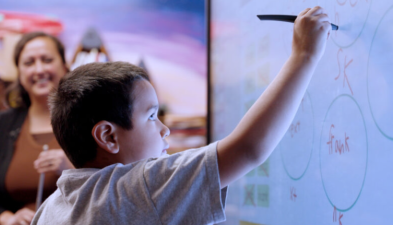
Intelligent educational assistance tools, such as smart pens and interactive whiteboards, offer more diverse teaching methods. Teachers and students can use these tools to achieve more intuitive interaction, promoting a more active classroom atmosphere and improving learning outcomes.
Data Analysis and Teaching Optimization:
Technology provides education with a wealth of data, including students' learning habits and comprehension levels. Through data analysis, educators can better understand students' needs, optimize teaching content and methods, and improve the overall quality of education.
Distance Education and Online Collaboration:
Distance education and online collaboration tools allow students to move beyond traditional classrooms and participate in academic and practical activities globally. This provides students with broader learning opportunities, enabling them to better adapt to the diverse work environments of the future.
Cultivating Technological Literacy:
Future education will not only focus on imparting subject knowledge but also emphasize cultivating students' technological literacy. Students need to master skills such as information management, innovative thinking, and digital communication to better adapt to the development of future society.
Challenges and Reflections
While AI demonstrates enormous potential in education, we cannot ignore the challenges it presents. Data privacy and security issues, declining learning motivation due to technology dependence, and educational equity are all problems that urgently need to be addressed. Furthermore, the role of teachers is also changing; they are not only knowledge transmitters but also guides and supporters of student learning. Therefore, educators need to continuously improve their own technological literacy to better adapt to this change.
Conclusion
AI is changing our learning methods in unprecedented ways. It not only provides students with personalized learning experiences but also breaks down the boundaries of traditional education. However, technological progress needs to be combined with the updating of educational philosophies to truly achieve educational equity and quality. Future education will be a combination of technology and humanities, a dual enhancement of knowledge and skills. Let us look forward to the day when AI can pave a brighter future for every student's growth in this educational revolution.